
Getting the temperature right and cooking foods in the correct order are two of the most important skills for successful griddle cooking. Whether you’re making pancakes, bacon, smash burgers, or a full breakfast spread, mastering these two fundamentals will help you cook food evenly, avoid burning, and serve everything hot at the same time.
Quick Summary
- Cook by Temperature, Not Knobs – Different griddles reach different surface temperatures, so don’t cook by “high, medium, low.” Get an infrared thermometer so you know your actual surface temp.
- How to Get Your Griddle to Temp – Preheat slowly, start lower than you think, and check early with your infrared thermometer. Adjust burners as needed and learn your hot and cool spots.
- What Temperature to Cook At (E.G.S. Method) – Use the E.G.S. method: (e.g., Eggs 300–325°F, General cooking 375–400°F, Searing 450°F+).
- Cooking Order: Start with What Takes the Longest – Cook what takes the longest first so everything finishes together — potatoes before eggs.
- Use Warming Zones – Turn one burner low or off to create a warming zone so finished food stays hot without overcooking.
Jump to:
Watch The Video
Why Temperature Control Matters
Temperature control is the backbone of griddle cooking. Unlike a kitchen stovetop, a griddle has a large surface that can vary widely in heat from one area to another. And griddles don’t retain heat the same way thicker restaurant flat tops do — they’re thinner and react quickly to burner adjustments and weather conditions.
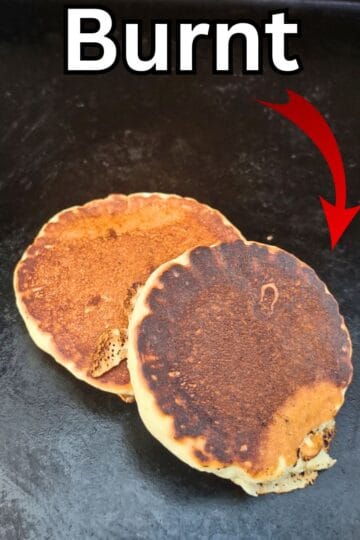
Most griddles even run a little hot, which is fine for searing steak or burgers, but not ideal for eggs or pancakes. If you cook by the burner setting alone, results can be inconsistent and lead to burning or undercooking.
That’s why I reccomend all new griddle owners use a reliable infrared thermometer. I use mine almost every time I turn the griddle on.
Cook by Temperature, Not Knobs
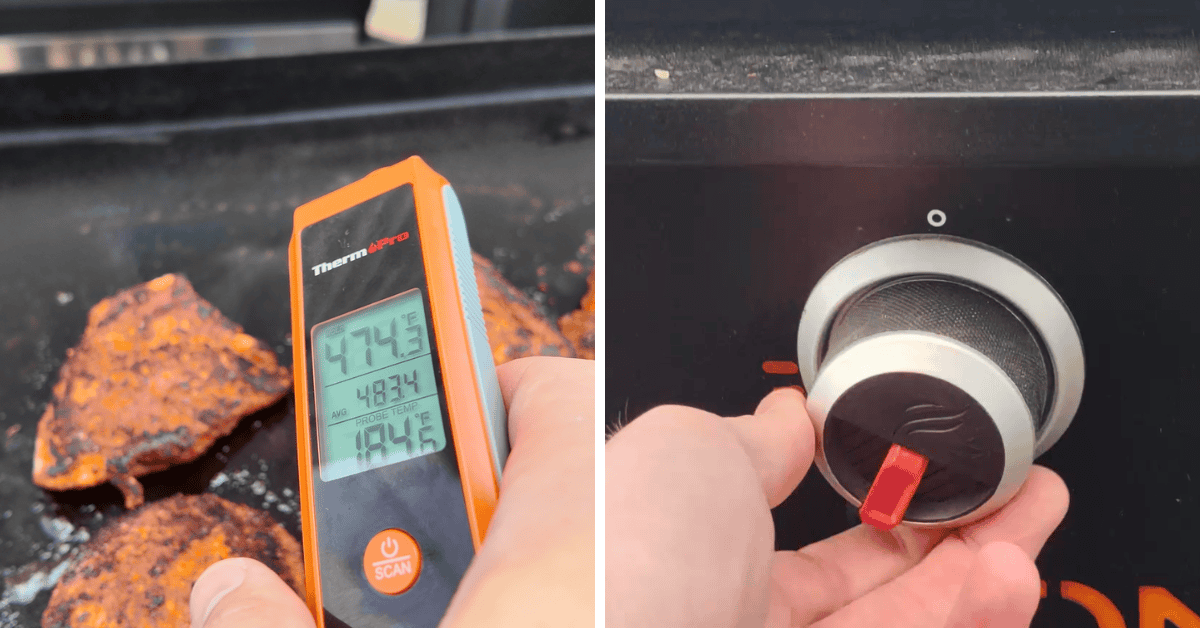
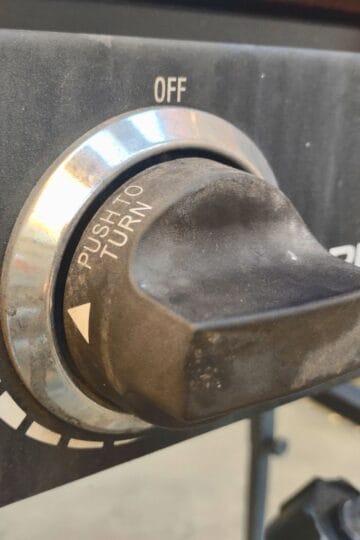
You shouldn’t rely on the knob settings because they don’t tell you the actual surface temperature. Here's some good examples of why I don't go by the knobs in my videos. I always reference the surface temperature.
- A two-burner griddle on “medium” will not cook the same as a four-burner on “medium.” All the burners heat one solid surface, so size matters.
- Outdoor conditions change everything. Cooking in 90° summer heat is very different from 40° fall weather.
- Different brands and BTU outputs heat differently. “Medium” on one brand of griddle will not match “medium” on another.
Get an Infrared Thermometer
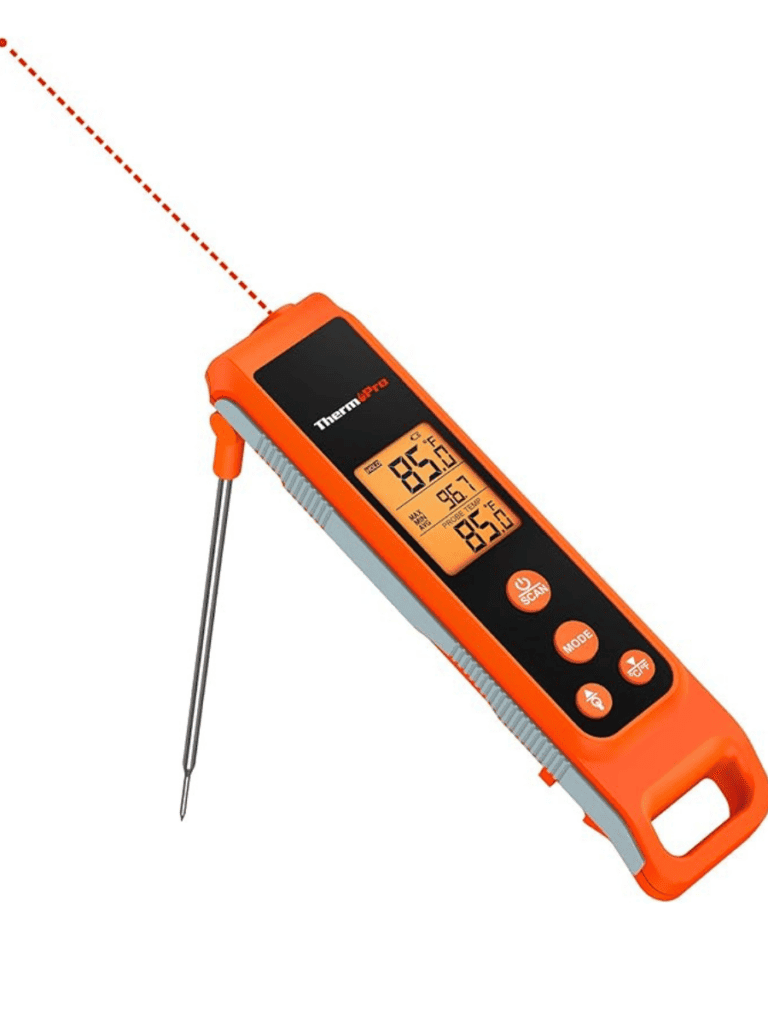
Because getting the right temp is one of the most important skills in griddle cooking. I recommend all new griddle owners get an infrared thermometer. It helps you avoid burning food and I still use mine everytime.
My favorite infrared thermometer is the Thermopro 2 in 1 infrared thermometer. You can use it to get your griddle surface temp and the internal temp of your food. Get 20% off by using code Johnny10
(This is an affiliate link so I do receieve a small commission at no additional cost to you)
What Temperature to Cook at on a Blackstone Griddle
When I use a thermometer, I’m not chasing an exact number. I just try to get close. Your griddle is never going to be the same temperature across the whole surface anyway, so stressing over perfect temps doesn’t really help. These are just the ranges I personally shoot for, not hard rules you have to follow.
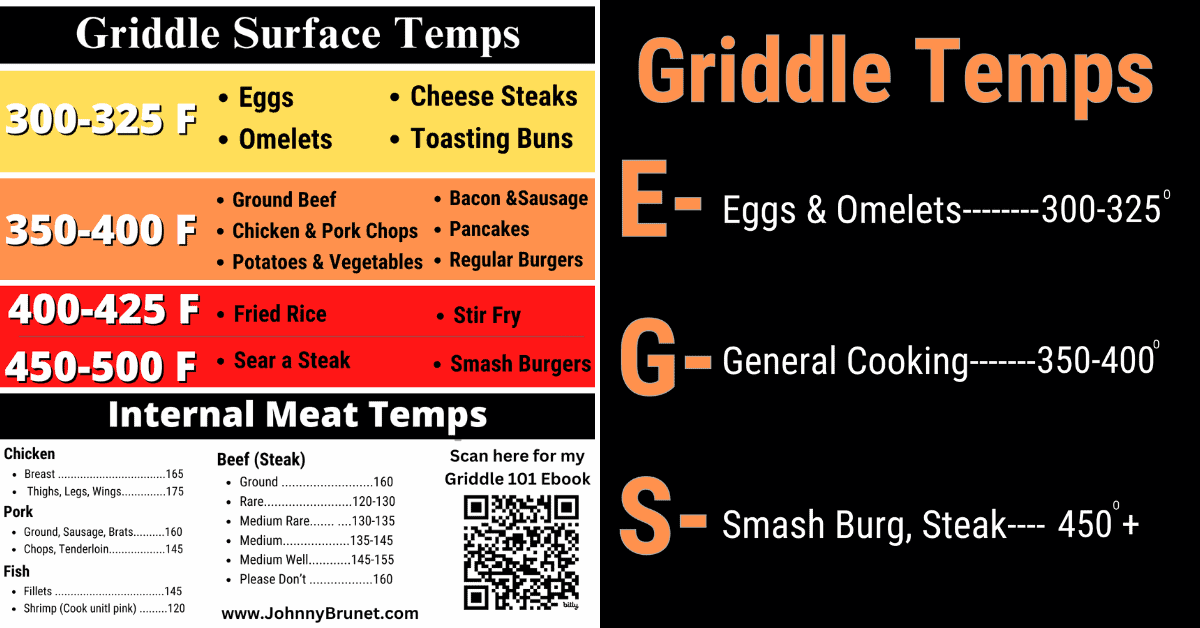
I do have a full temperature cheat sheet that I give away for free when you sign up for my newsletter, but you don’t need that to get started. My general rule of thumb is something I call E.G.S. — an acronym I made up that keeps things simple for beginners.
The E-G-S Temperature Method:
- Eggs & Omelets → 300-325°F
- General Cooking → 350-400°F
- Searing (Steaks, Smash Burgers) → 425-500°F
How to Get Your Griddle to the Right Temperature
Getting your griddle to the proper temperature can be tricky, but these tips will help:
- Preheat Slowly: Start by preheating all burners on low, even if you don't plan to use them all. This prevents warping and allows the heat to distribute evenly. After 5 minutes, check the temperature with your infrared thermometer. If it's not hot enough, wait another 5 minutes (10 total) then if it's still not hot enough turn the heat up to medium.
- Put Food Down at the Right Time: Once the griddle reaches your desired temperature, add your food immediately. Don't let it preheat for too long, as the surface can overheat. I like to check my temperature no more than 5 to 10 minutes after I turn it on. If you start prepping inside and leave the griddle for 20 minutes, it could get way hotter than you wanted.
- Turn Off Burners: I always turn all my burners on to preheat the griddle, but then during cooking I may turn some off to maintain heat control. For example, if you're cooking in the middle two zones, switch off the outer burners to prevent overheating. This also helps create warming zones. Lets say I'm doing breakfast and the bacon and potaoes are done cooking but I want to keep them warm. I will shut off an outside burner and push the bacon and potatoes to that side.
- Use Residual Heat: For delicate items like eggs, you can turn off the burner entirely and use residual heat to cook them slowly and evenly. This technique is perfect for preventing overcooking. Or if your griddle is too hot and you want to lower the temp, you can squirt down a little bit of water to do so.
- Learn Your Griddle's Hot and Cool Spots: Every griddle has unique temperature patterns. Over time, you'll learn which areas run hotter or cooler. Use cooler zones for tasks like toasting buns or cooking eggs, and reserve hotter spots for searing or frying. A good way to learn your hot and cold spots is a toast test. I have a video below going over that process.
Griddle Cooking Order Matters
The order in which you cook foods on your griddle can make or break a meal. Timing is crucial to ensure everything is ready to serve at the same time, especially when cooking breakfast or multi-item meals. It may seem obvious to you but I had to learn the golden rule which is
Start with the foods that take the longest to cook.
For example, when making breakfast:
- Potatoes: These take the longest, so start them first.
- Bacon: Next up, as it needs time to render and crisp.
- Pancakes: They cook quickly but should be ready before the eggs.
- Eggs: Save these for last, as they cook in just a few minutes.
Use Warming Zones
Turn off or lower the heat on the outer burners to create warming zones. Once a dish is done, move it to these cooler areas to keep it warm without overcooking. This technique is especially helpful when preparing large meals.
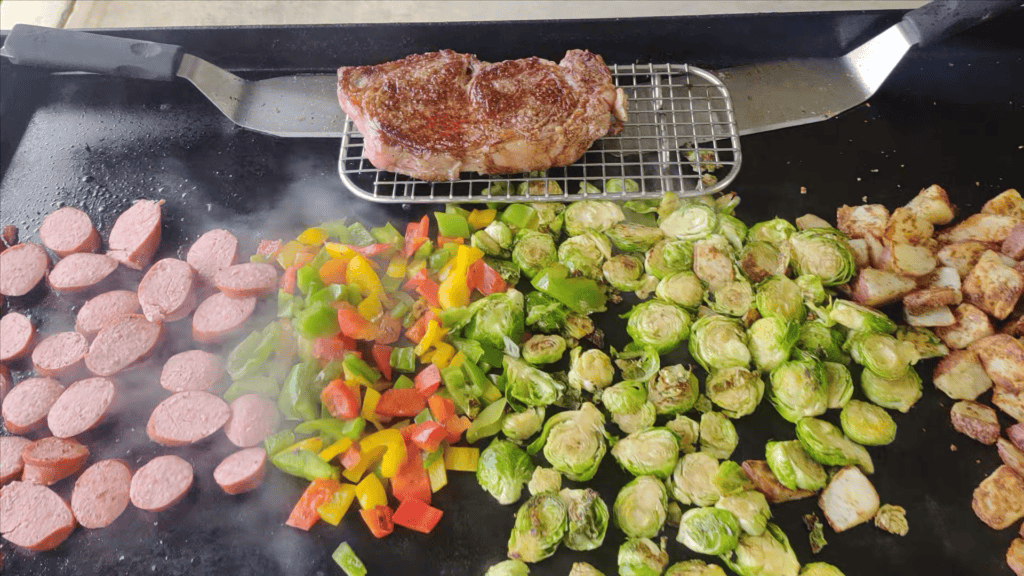
Also, I often use a small warming rack to hold stuff slightly off the griddle but still close enough to stay warm. You can get one of those here.
Bring It All Together
By focusing on temperature control and cooking order, you’ll quickly gain confidence with your griddle. These skills are the foundation for creating delicious meals and avoiding common pitfalls as a beginner griddle owner.
If you're a new griddle owner check out Griddle 101: Complete Beginners Guide! It's everything a you need to know to get started on a griddle.
[…] Check out my full blog post on cooking order here: Two Most Important Skills for New Griddle Owners […]