
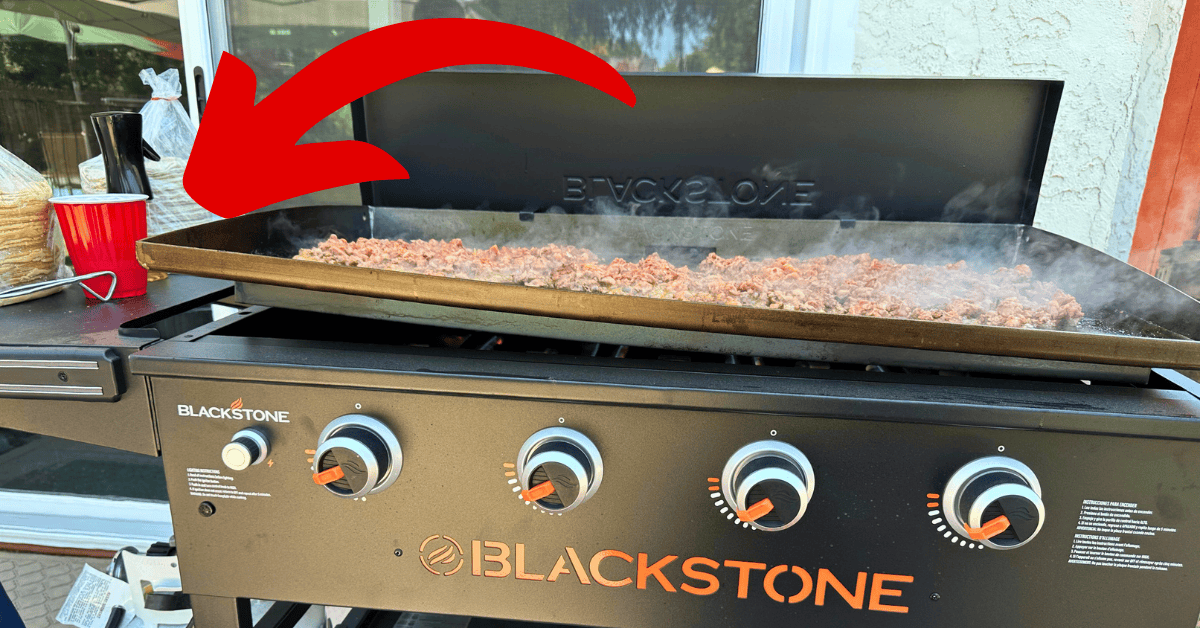
If your Blackstone griddle warped, you’re not alone. It can be pretty alarming the first time it happens.
One minute everything looks normal, and the next minute the cooktop is popping or lifting up in the middle.
I actually warped one of my own griddles, so in this post I’ll explain:
- How I warped my Blackstone griddle
- The most common reasons griddles warp
- How to fix a warped griddle
- What I do now to avoid it happening again
The good news is that most warped griddles flatten back out.
I made a full video explaining how my griddle warped and what the manufacturers say about fixing it. If you prefer watching, you can see the full breakdown here.
Quick Answer: Why Griddles Warp
A warped Blackstone griddle usually happens because of rapid temperature changes or uneven heating.
The most common causes are:
- Heating the griddle too quickly on high heat
- Running only part of the burners
- Placing very cold or frozen food on an extremely hot griddle
- Dumping large amounts of cold water onto a hot cooktop
In many cases the metal will flatten back out the next time it heats up, but if it doesn’t there are a few things you can try to fix it.
If you're new to cooking on a flat top, I put together a full Blackstone Griddle 101 beginner guide that covers everything from seasoning and temperature control to cleaning and maintenance.
How I Warped My Blackstone Griddle
This one was completely my fault.
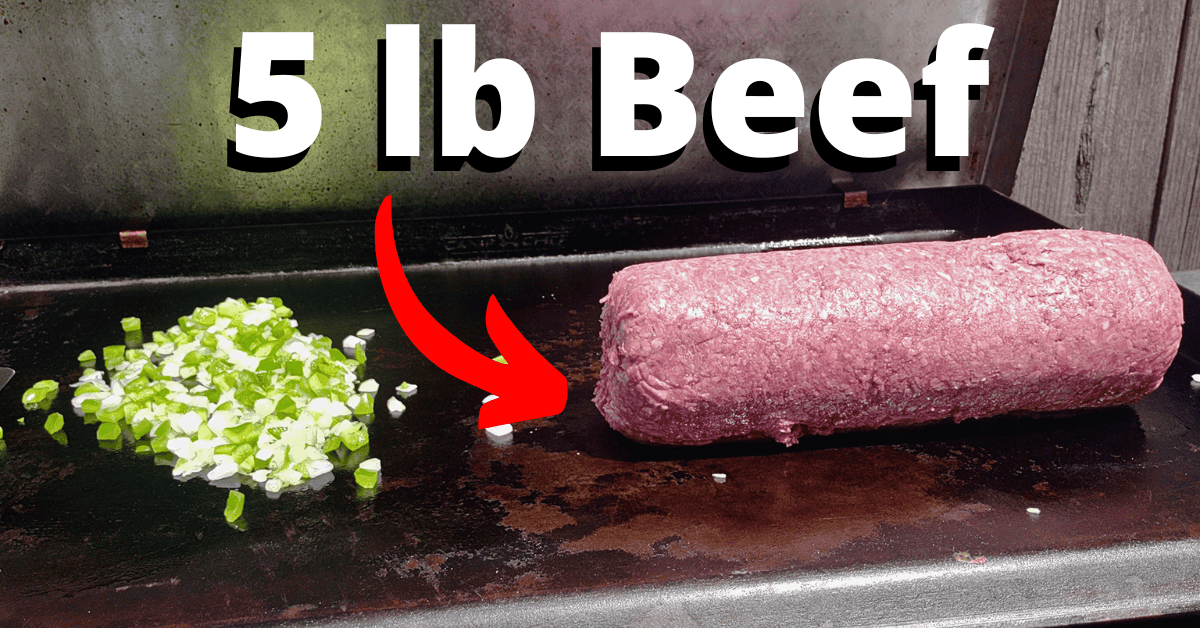
I had the griddle ripping hot — probably over 500°F. Then I placed a partially frozen 5-pound log of ground beef right on the cooktop and walked inside to do some prep.
About a minute later the griddle started popping and lifting several inches in the middle.
I immediately shut everything off and just let it cool down.
After about 30 minutes it slowly settled back down. Mine still has a very slight lean now, but it cooks just fine.
What happened was basically a huge temperature shock. The griddle was extremely hot and I suddenly put something very cold on it.
The Most Common Causes of a Warped Griddle
Most manufacturers list very similar causes for a warped griddle. These are the three big ones.
1. Heating the Griddle Too Fast
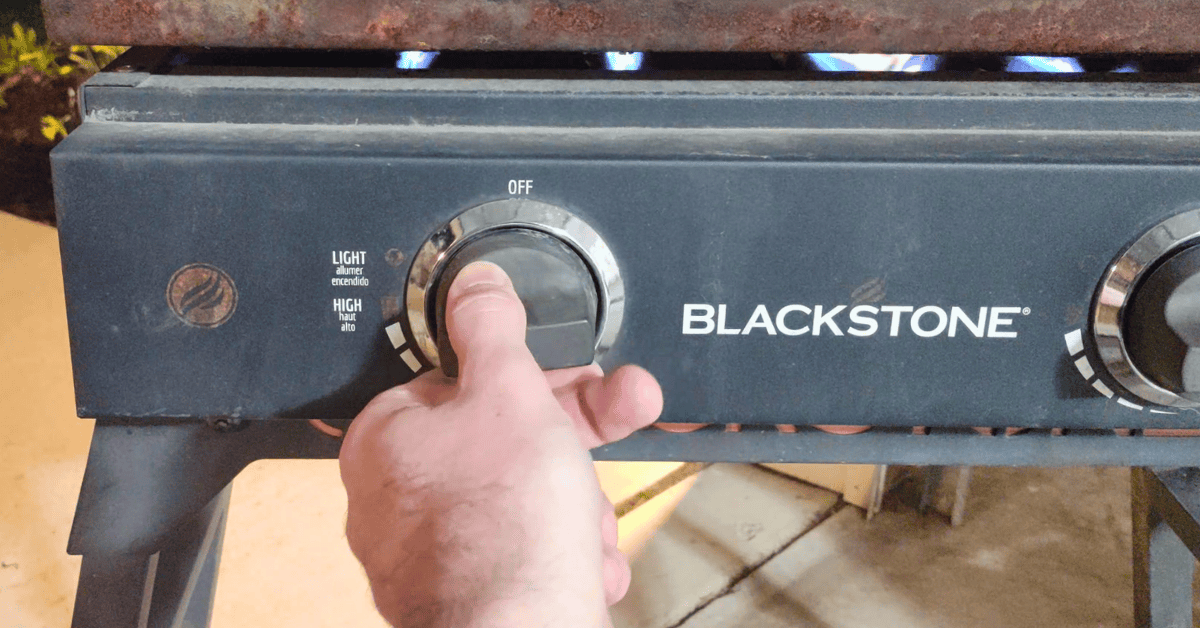
Turning the burners on high right away can cause the steel to heat unevenly.
That doesn’t mean you can’t cook on high heat. I still cook on high plenty of times.
What I avoid now is going straight to high. I usually start my preheat on medium or medium-low, then work my way up if I need more heat.
If you’re new to griddling, learning how to get your griddle to the proper temperature makes a huge difference in how your food cooks and also helps prevent problems like warping.
This is especially important in cold weather. If it’s winter and the griddle is ice cold, you definitely don’t want to walk outside and immediately crank it to high. Let the metal warm up gradually first.
2. Uneven Heat Across the Griddle
Another cause of a warped griddle is heating only part of the cooktop.
For example, turning on two burners and leaving the other two off for the entire cook.
I’ll be honest — I still turn burners off sometimes. But I always do it after the griddle has fully preheated.
For example:
- I preheat all four burners first
- Then I might turn an outside burner off to create a warming zone
- Or run one side higher heat and one side lower heat
The key is that I never start cooking with only half the griddle on.
3. Extreme Temperature Changes
The biggest cause of a warped Blackstone griddle is a sudden temperature change.
Examples include:
- Putting large frozen foods onto a very hot griddle
- Dumping a lot of cold water onto a hot cooktop
- Trying to cool the griddle quickly with water or ice
That’s exactly what happened when I put a 5-pound partially frozen log of beef onto a 500+ degree griddle.
That said, frozen food itself isn’t the problem.
I still cook frozen foods on my griddle all the time.
For example I’ve cooked:
- Frozen french fries
- Frozen hash brown patties
- Frozen diced potatoes
- Frozen vegetables
- About 12 frozen burger patties at once
The difference is griddle temperature.
When I cooked the frozen burgers, the griddle was around 350°F. Then I slowly increased the heat while cooking.
No problems at all.
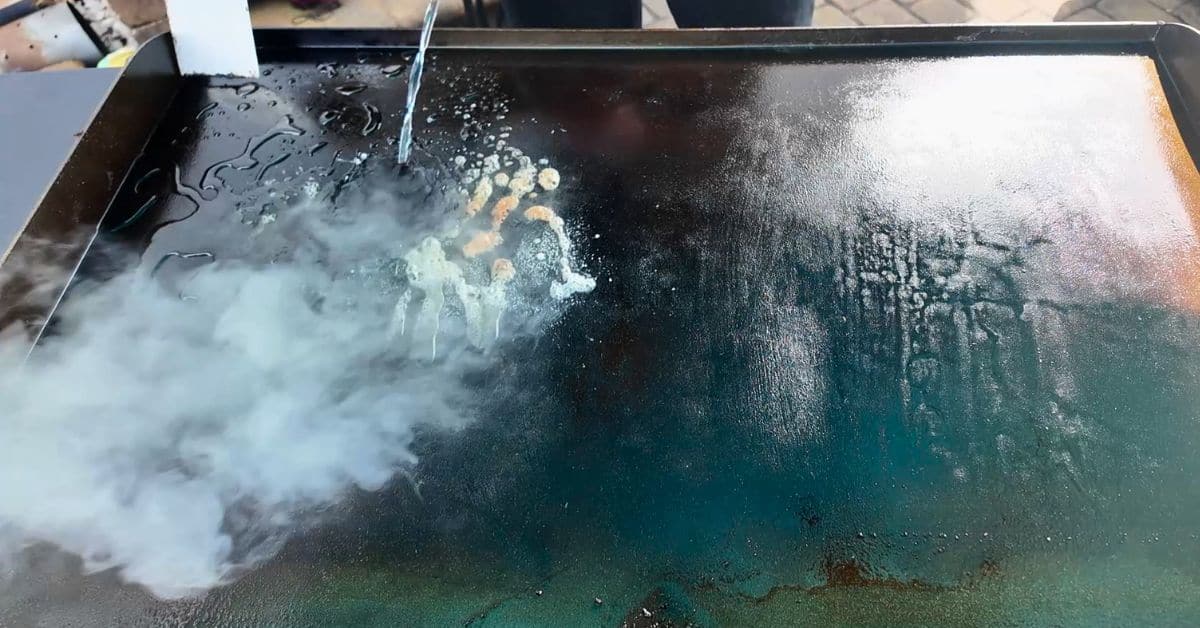
I also still clean my griddle with water. The key is using small amounts and not pouring ice-cold water onto a blazing hot surface. If you want to see exactly how I do it, you can read my guide on how to clean a Blackstone griddle.
What I avoid now is putting large frozen items onto a smoking hot griddle.
How to Fix a Warped Griddle
In many cases, a warped Blackstone griddle will flatten back out the next time you heat it up.
Manufacturers often recommend simply heating the griddle and letting the metal expand again.
If it doesn’t return to normal, you can try this method:
- Place two large pots filled with water on the raised area of the griddle.
- You can also use bricks or other heavy objects if needed.
- Turn the burners on low and slowly heat the griddle.
- Let the weight sit there while it heats.
Sometimes the combination of heat and weight helps the metal settle back into place.
Contact the Manufacturer First
If your Blackstone griddle warped, the first thing I recommend doing is contacting the manufacturer.
Even if your griddle is outside the warranty, it’s still worth reaching out.
You never know what they might do. Some companies will offer replacements, replacement parts, or other solutions even when the warranty has expired.
Frequently Asked Questions
Will a warped griddle go back to normal?
Most of the time, yes. As the griddle heats and cools, the metal expands and contracts. Many warped griddles flatten back out after you turn it off while it cools.
Is it normal for a griddle to pop while heating?
Some minor popping can happen as the steel expands while heating. Large lifting or bending usually means the griddle experienced a sudden temperature change.
Can frozen food warp a griddle?
Frozen food itself usually isn’t the problem. Warping typically happens when large frozen items are placed on an extremely hot griddle, creating a rapid temperature change.
Final Thoughts
Most griddle warping comes down to large temperature swings or uneven heating.
A few simple habits go a long way toward preventing it:
- Preheat gradually
- Heat the whole griddle first
- Avoid placing large frozen foods on extremely hot surfaces
Do that and your griddle will likely last for years without issues.
If you're also dealing with other griddle maintenance issues, you might want to check out my guide on removing rust from a griddle, where I walk through the exact steps I use to bring a griddle back to life.
Comments
No Comments