
If you just got a brand-new Blackstone griddle (or any other cold-rolled steel griddle), you need to season it before your first cook. Seasoning helps prevent sticking, protects against rust, and sets you up for success long-term.
Here’s exactly how I do it, step by step, without any unnecessary fluff. If you want more detail, a video, or help with what to cook first, I’ve got that covered below.
Simple Instructions (Quick List)
- Wipe the griddle clean with water and dry.
- Set the griddle to high until the surface changes color. (15 Min)
- Use tongs and paper towels to spread a thin, even layer of avocado oil across the griddle. (2 tbsp. of oil for a 4 burner griddle)
- Let it smoke until it stops (20 Min), then repeat 3–4 times to build a seasoning layer.
- Let the griddle cool when finished.
Jump to:
Watch the Video
Full Step-by-Step Instructions
What You’ll Need
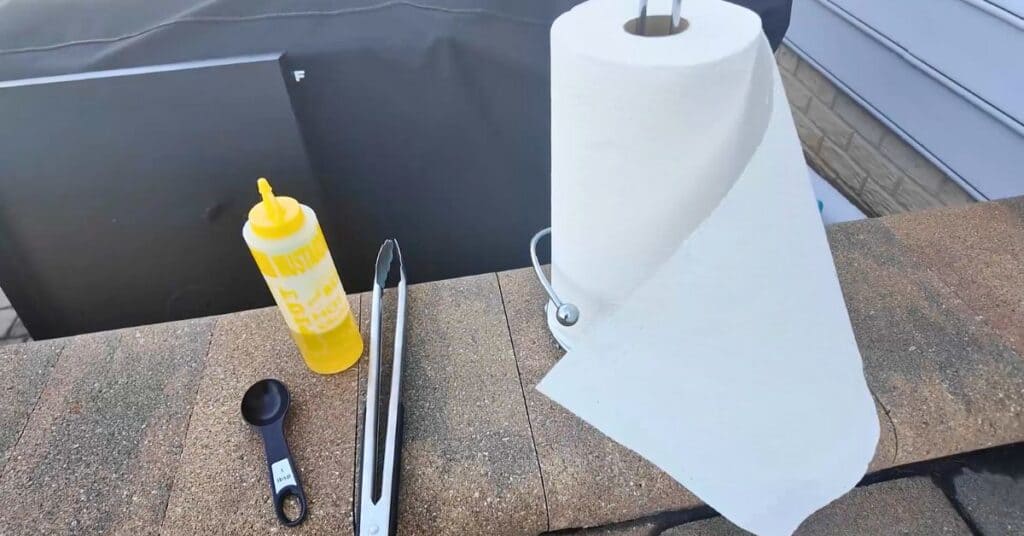
- Cooking oil (I've used avocado, canola, or Blackstone’s seasoning oil)
- Paper towels or a clean cloth
- Metal tongs or heat-resistant gloves
- 1 tablespoon measuring spoon
Step 1: Wash it with water, then dry completely
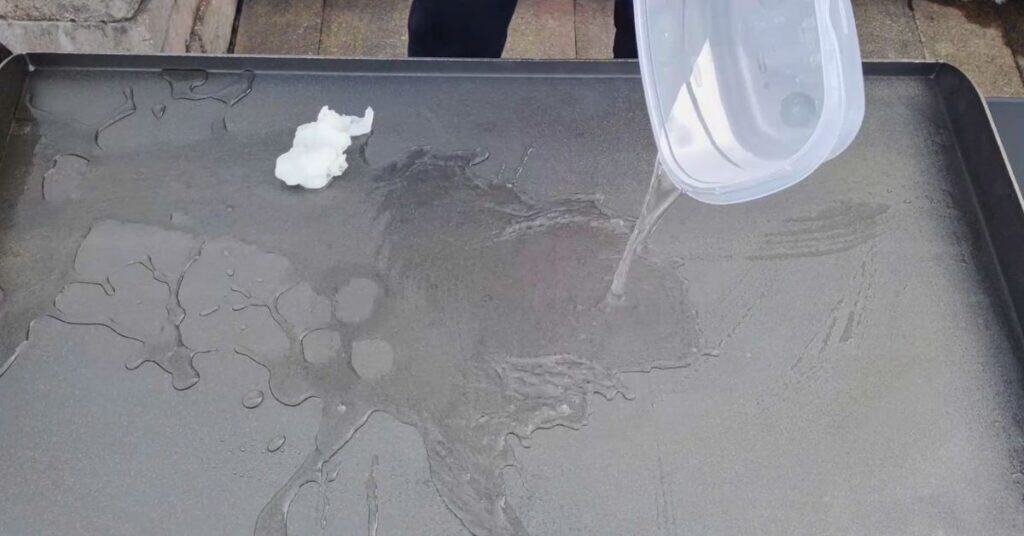
Your griddle just came out of the box, and it’s probably got some factory dust or packaging residue on it. Give it a good wash with warm water, you can use soapy water if you want but you don't have to. Rinse it thoroughly and dry it completely.
Step 2: Heat the griddle until it starts to darken
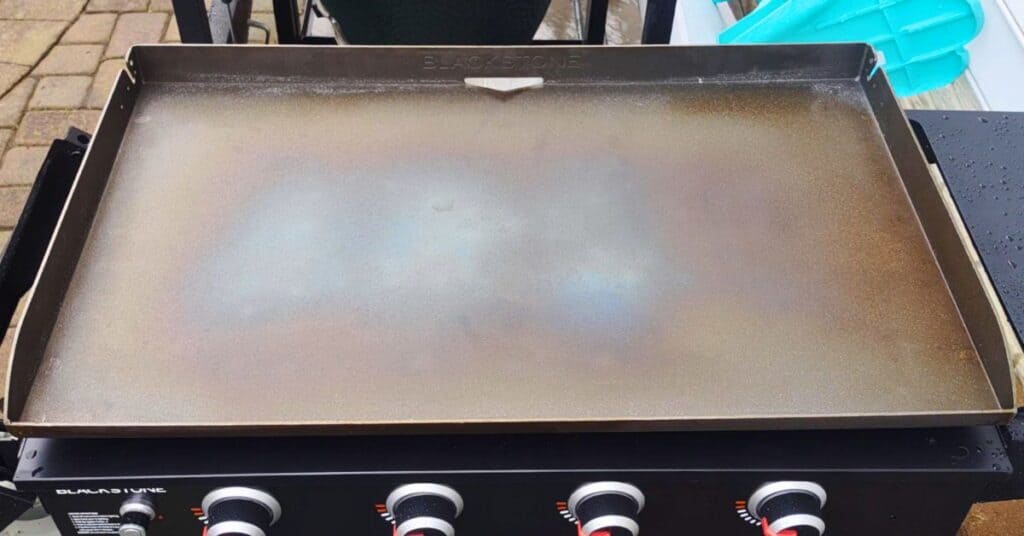
Fire it up! Turn all burners to high and let it heat for 10-15 minutes. You’ll see the surface start to darken—this is totally normal and exactly what we want. If it’s cold outside, it might take a little longer, but that’s fine.
Step 3: Add a thin, even layer of oil across the surface
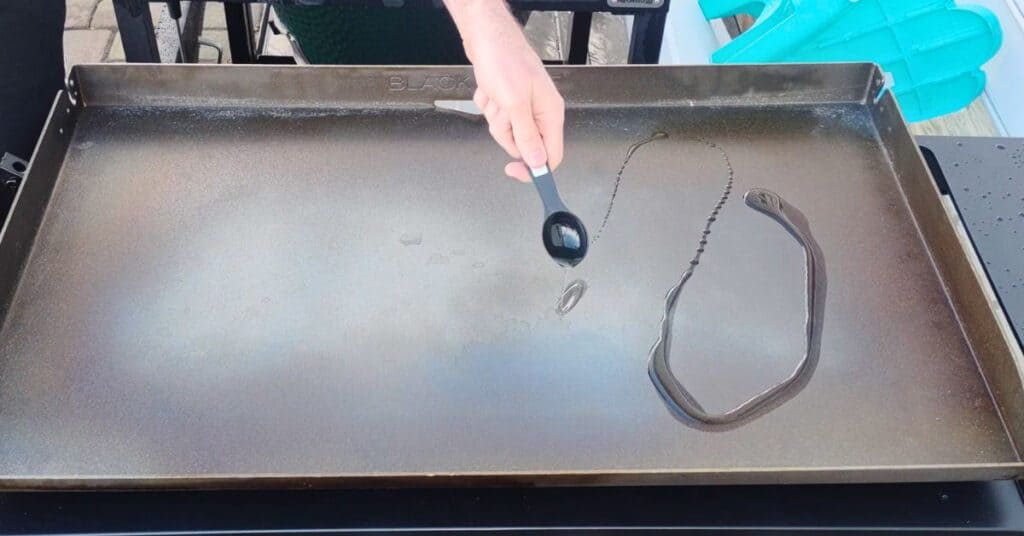
Now that your griddle is ripping hot, pour on a little oil—about 1.5 tablespoons for a 2-burner griddle, 2 tablespoons for a 4-burner. Less is more here; a thin, even layer is the key. Use tongs and a paper towel to spread the oil over the entire surface, including the sides and edges. Don’t let it pool—if it’s too thick, it’ll turn sticky instead of smooth.
Step 4: Let the oil smoke and burn off (15 minutes)
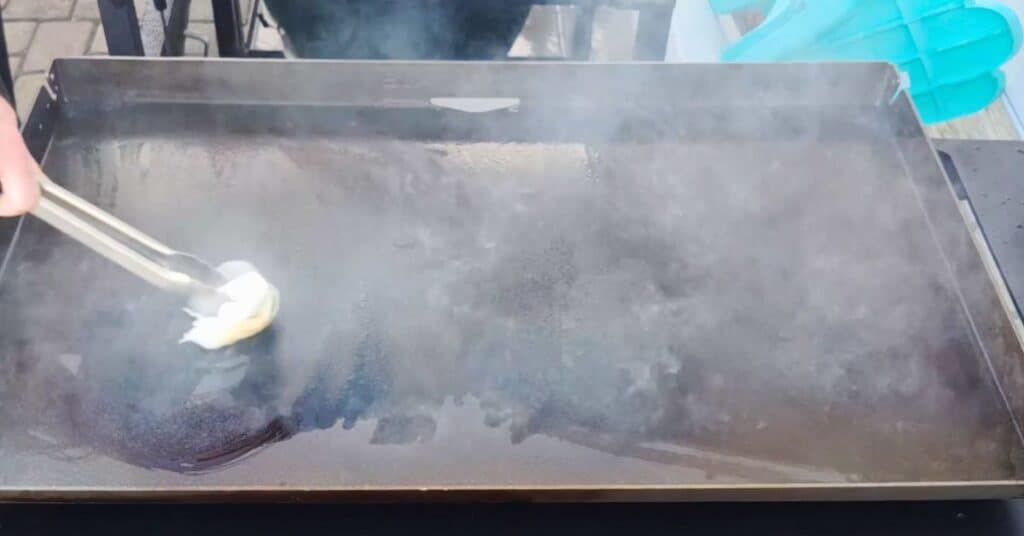
Once your oil is spread, let it heat until it smokes. This is called polymerization (fancy word for bonding oil to metal). Let it keep going until the smoke stops—this usually takes 15-20 minutes.
⭐️Pro tip: From my experience, seasoning tends to come out a little better if you let the griddle cool down between coats, but it takes longer. Doing it this way can turn seasoning into a 4 hour process. If you don’t want to wait that long, you can keep the griddle hot and apply the next coat once the smoke clears, which usually takes around 2 hours total. In my experience, both methods work — it just depends on how much time you want to spend.
Step 5: Repeat 3–4 times for a strong seasoning
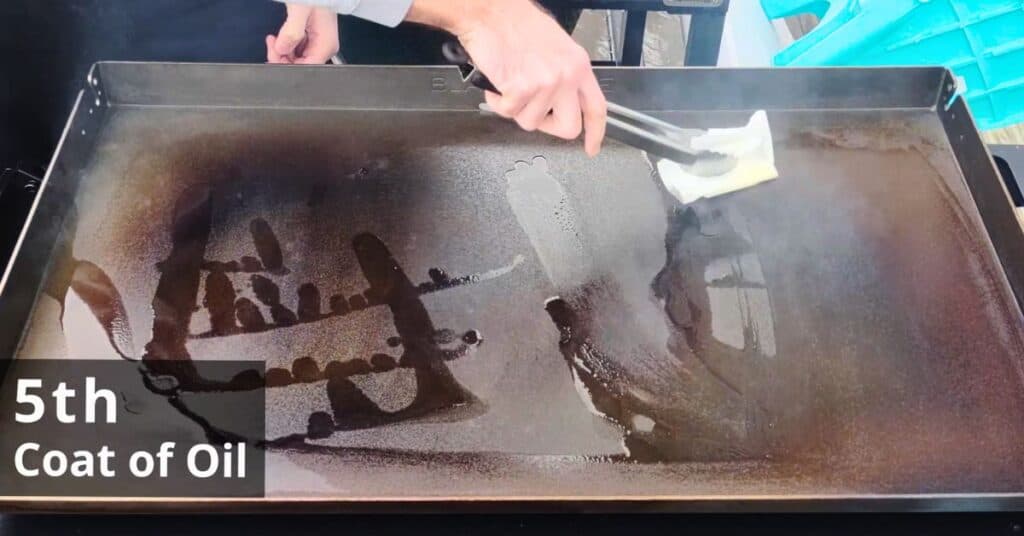
Repeat this process until you’ve applied 3–5 total coats of oil. Each time, add a new thin layer after the smoke clears. If you’re short on time, three coats is plenty. If you’ve got the time (or a cold drink in hand), five coats will give you a little extra protection.
Once the final coat has finished smoking, turn the griddle off and you’re good to go.
What to Cook First On Your Blacktone
Once your griddle is seasoned, the next question is always the same: what should I cook first?
My go-to recommendation is bacon smash burgers. Bacon helps continue the seasoning process, and lets be honest you bought a griddle to make smash burgers.
What To Cook First on Blackstone: Bacon Smash Burgers
How to Remove Rust
If your griddle develops rust, don’t worry—it’s a common issue and easy to fix. A little elbow grease and the right approach will get it back to smooth, seasoned perfection. For a step-by-step guide on removing rust and restoring your griddle, check out our full post on tackling griddle rust How To Remove Rust from a Blackstone Griddle.
Seasoning Frequently Asked Questions
I've used avocado, canola & the Blackstone Seasoning. They all worked fine, I like avocado the best.
Yes. Seasoning helps prevent sticking, protects the steel from rust, and makes cooking easier right from the start.
I recommend 3–5 thin coats. Three works fine if you’re short on time, and five gives you a little extra protection.
That’s completely normal. Your griddle won’t season evenly right away, especially around the edges and corners. It evens out over time as you cook and continue using oil. Or if you'd like you can get a torch and burn off the oil in the corners and around the edges to make it all black.
Usually this means the oil was applied too thick. Scrape off any loose spots, keep cooking, and future thin layers will smooth it out.
Yes. As long as there’s no rust or heavy buildup, you can season right over it. No need to strip it down every time. Or you can smooth it down with a pummice stone and burn off some more coats of oil.
No. Initial seasoning is the big one. After that, normal cooking with oil continues to build and maintain the surface.
Edges usually run cooler. That’s normal and nothing to worry about — they’ll darken gradually with use.
Yes. Once the final coat stops smoking and the griddle cools slightly, you’re good to start cooking.
Rust happens. Scrape it down, clean it, and re-season. It’s fixable and not the end of the world. Check out my post How To Remove Rust from a Griddle section above the FAQs
Even after seasoning you may have some slight sticking at first. It will continue to build seasoning and become more non-stick. Also don't be afraid to use a little more oil.
Want to learn more? Grab a copy of my e-book "Griddle 101: The Complete Beginners Guide to Flat Top Grilling". It goes over everything I know about griddling and has 101 delicous recipes for only $15. Happy griddling!
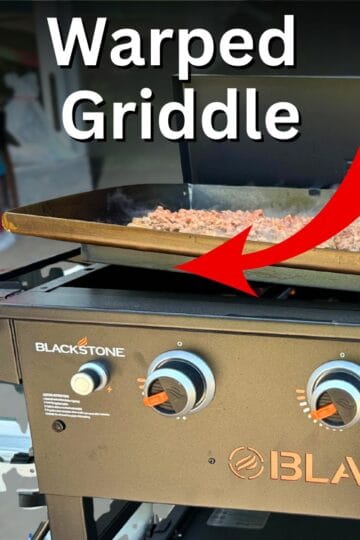
[…] Check out my full blog post on How to Season a Blackstone Griddle! […]