
Keeping your Blackstone griddle clean after every cook makes it last longer, prevents rust, and keeps food tasting great. These steps are for general cleaning after each cook.
If you have a lot of rust or flaking, check out my post How to Remove Rust and Reseason a Blackstone Griddle.
Below you’ll find simple instructions to follow after each cook, a full video walkthrough, detailed step‑by‑step steps, and answers to common cleaning questions.
Simple Instructions (Quick List)
- Turn griddle to low & scrape – Push loose food debris into the grease cup with a metal spatula or scraper.
- Wipe the surface – Use a paper towel or Blackstone scrub pad to remove leftover bits.
- Steam & scrape – Add a few tablespoons of water and scrape again toward the grease cup.
- Dry completely – Wipe the griddle with a towel so no moisture remains.
- Oil the surface – Apply a thin coat of cooking oil to protect your seasoning. Turn the griddle off.
- Empty the grease cup – Keep your drip tray clean for the next cook.
Jump to:
Watch Video
Full Step-by-Step Instructions
Step #1 – Scrape Away Food Debris
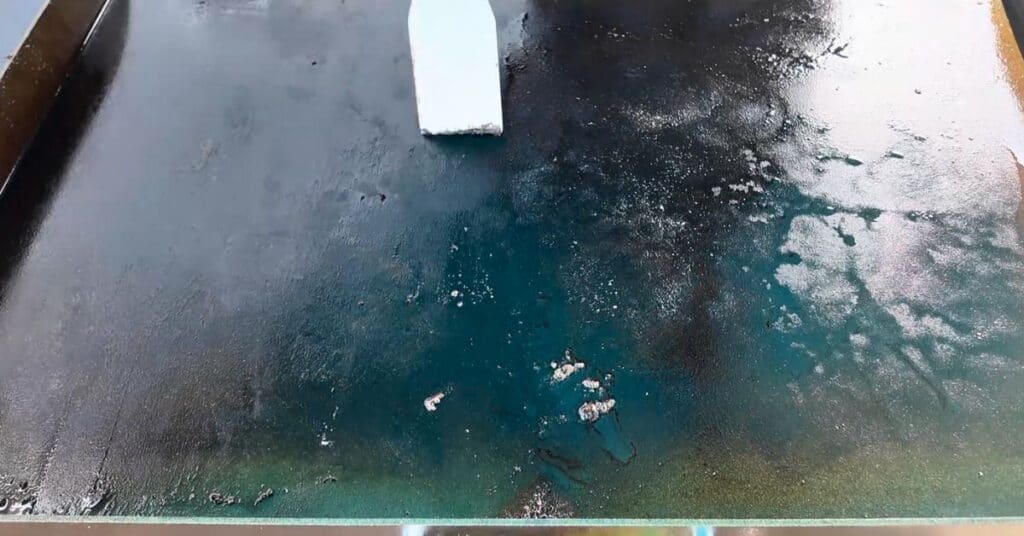
Turn your griddle down to low heat before you start scraping. You’ll need a spatula, scraper, dough scraper, or even a dedicated griddle cleaning tool. There are a few different tools on the market, some with scrubbers and scrapers combined, but for this guide, I’ll be using a simple spatula.
Start scraping off all the food debris and grease, pushing everything towards the grease trap at the back of the griddle. Don’t forget to check the corners—grease and food bits tend to collect there.
⭐️Pro tip: Scrape your spatulas outside while they’re still hot. It’s so much easier to clean them now rather than letting everything dry and dealing with it later in the sink.
Step #2 – Wipe Down with a Paper Towel
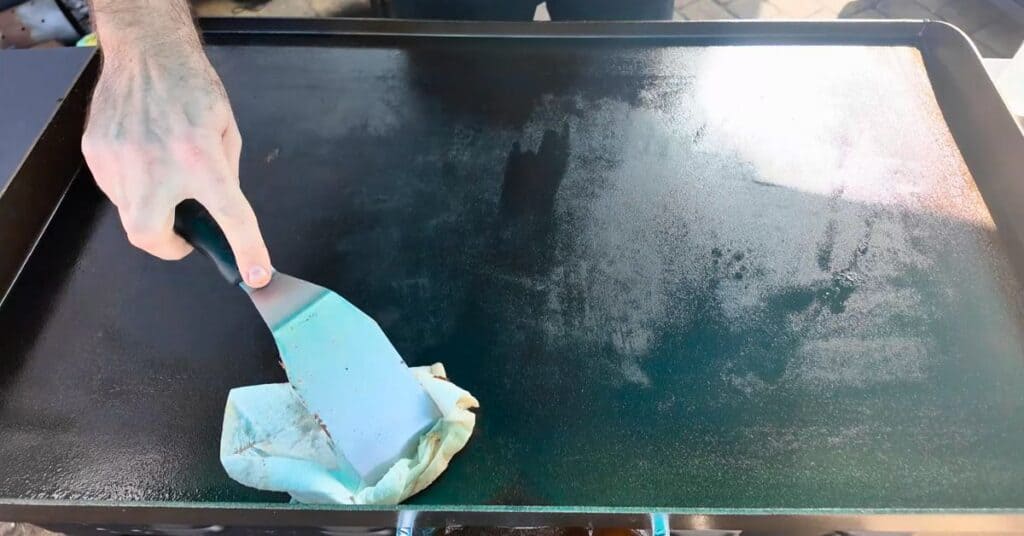
Once you’ve scraped everything into the grease trap, grab a paper towel and wipe down the surface. Pay extra attention to the corners where grease builds up. Some people prefer using blue Scott shop towels, old rags, or even cut-up t-shirts instead of paper towels to reduce waste. Use whatever works best for you.
Step #3 – Squirt Water & Scrape Again
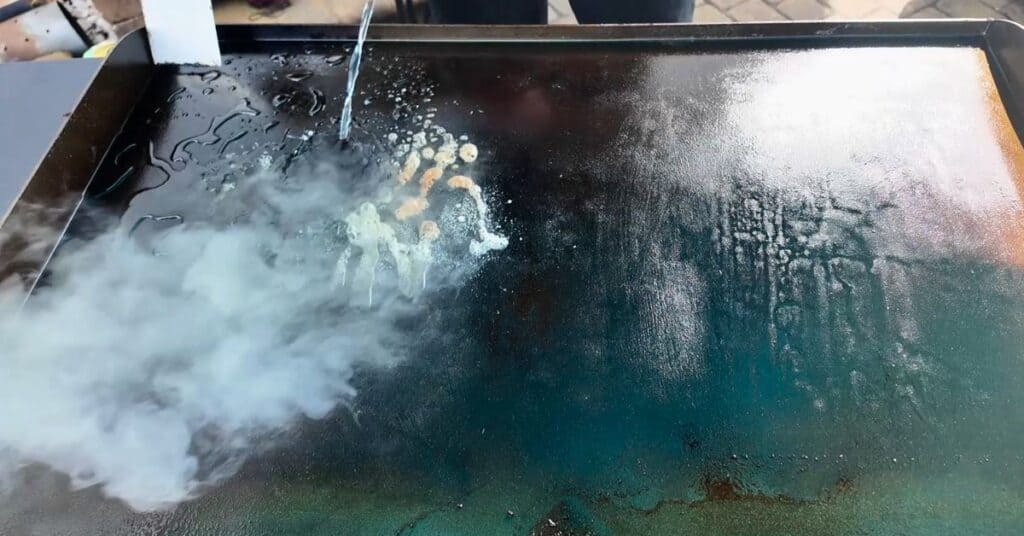
Now, take a squirt bottle filled with warm water and spray down the griddle. This helps loosen any stubborn bits stuck to the surface.
Just to reiterate, I have all four burners on low while doing this. The gentle heat helps break things up, but you don’t want it too hot.
If you cooked something like a stir-fry with a sticky sauce, you might need to use more water to lift any cooked-on residue. Blackstone recommends using only a few tablespoons of water at a time, which is why I prefer a squirt bottle over dumping large amounts of water on the griddle.
But won't water warp my griddle or cause rust?
-A small amount of WARM water at low temperature is fine.
-A lot of COLD water on a very hot griddle can warp it.
Scrape everything toward the grease trap again. Repeat this process two or three times until the surface is completely clean. Be careful—the steam from the water can burn you.
Step #4 – Wipe It Down Again
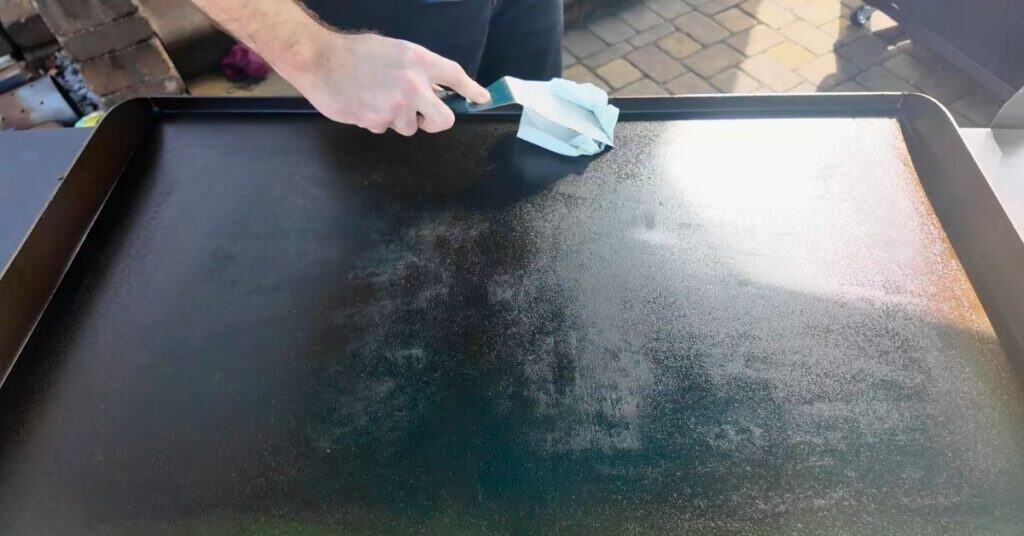
After scraping, grab another paper towel (or shop towel) and wipe down any excess water that hasn’t evaporated. Now, turn off the griddle.
Again, focus on the corners and check for any stubborn spots. If needed, squirt a little more water and wipe it down again until everything is clean and dry.
Make sure the griddle is completely dry before moving on to the next step.
Step #5 – Apply a Thin Layer of Oil
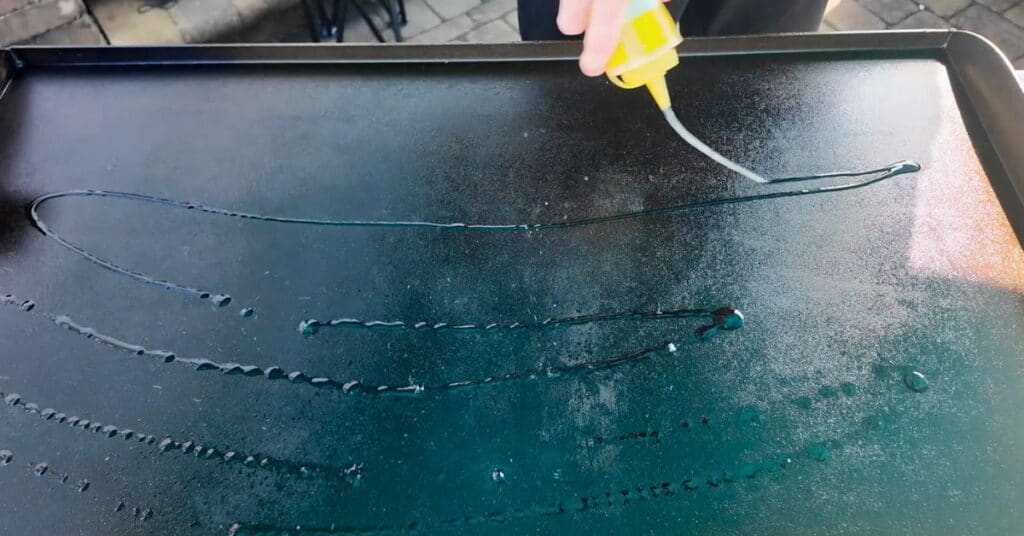
The final step is applying a thin coat of oil to prevent rust. You can use:
- Avocado oil (This is what I use the most)
- Canola oil
- Vegetable oil
- Blackstone seasoning
Pour about two tablespoons onto the griddle and spread it around using a paper towel. A thin layer is all you need. Make sure to cover the entire surface, including the corners and side walls.
And that’s it! Now just cover your griddle until next time.
How to Remove Rust
If your griddle develops rust, don’t worry—it’s a common issue and easy to fix. A little elbow grease and the right approach will get it back to smooth, seasoned perfection. For a step-by-step guide on removing rust and restoring your griddle, check out our full post on tackling griddle rust How To Remove Rust from a Blackstone Griddle.
Cleaning Frequently Asked Questions
Clean it right after cooking while it’s still warm. This keeps food debris and grease from sticking and causing buildup.
You want to wipe until there’s no thick black or yellow residue left. Some light discoloration is normal and won’t hurt your seasoning.
No — soap and cleaners strip the seasoning and can leave behind residue. Stick to scraping, water, and a towel for normal cleaning.
Yes — some experienced users skip water and just scrape while hot. The key is always to finish by wiping and oiling so the surface stays protected.
Scrape as much as you can, then use a few tablespoons of water to loosen the rest. If that doesn’t work, you can add coarse salt to help break it up.
Bonus: Silicone Mat
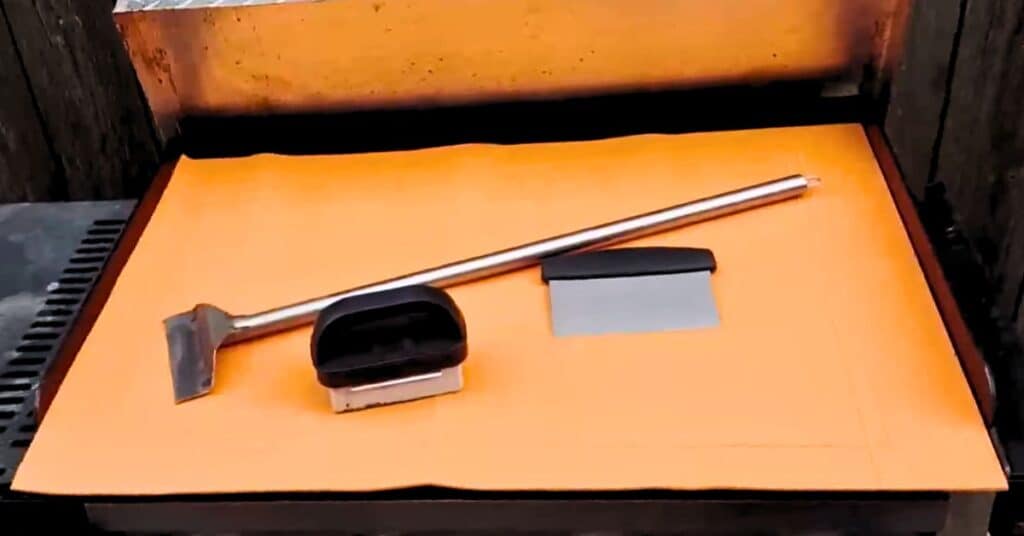
I get a lot of questions about orange silicone mats for covering the griddle. Here’s my take:
- A hard cover is the best option for protection.
- A soft cover works well, too.
- If you want extra protection, you can add an orange silicone mat underneath a cover but I don't think it's 100% necessary.
Want to Learn More?
For a complete beginner’s guide, grab a copy of my eBook, "Griddle 101: The Complete Beginner’s Guide to Flat Top Grilling.” It covers everything you need to know, plus includes 101 fantastic griddle recipes.
Happy griddling!


[…] Check out my full post on How to Clean Your Griddle here. […]