
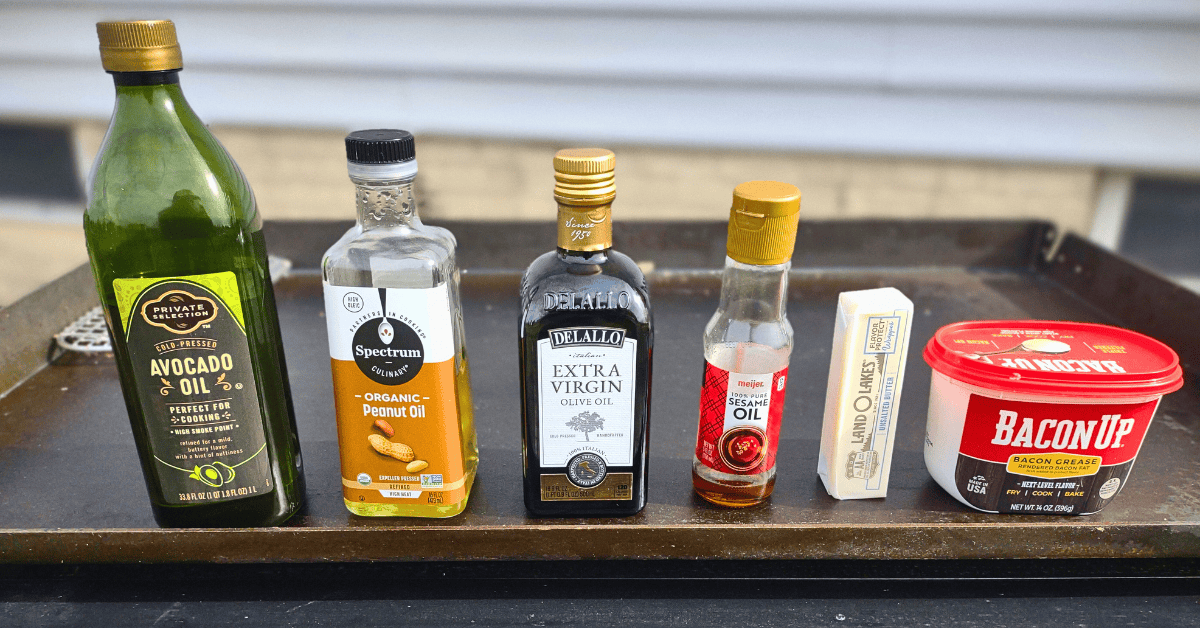
Oil is one of the most debated topics in the griddle world. People constantly ask what oil to cook with, what oil to season with, and whether you can use bacon grease or other animal fats. Add in health opinions, and it gets confusing fast.
In this post, I’m going to go over the oils I like for different jobs, why smoke point actually matters on a griddle, and my personal preferences after five years of cooking on residential griddles. I’m not saying this is the only oil you can use, this isn’t an oil bible, and I’m definitely not qualified to give health advice — so I won’t touch on that. This is simply what works for me after managing a diner for two years and spending the last five years cooking on a griddle at home.
Quick Summary
- I mainly season and cook on my griddles with avocado oil because it has a high smoke point and a neutral flavor.
- I do not recommend seasoning with bacon fat, as it can chip and flake over time unless you’re cooking on your griddle daily. Season with an oil first, then cook with bacon fat as much as you want.
- You can cook with any oil or fat you like — just be aware of the smoke point and try to stay below it. Since griddles get hot, I prefer high smoke point oils like avocado, but butter, lard, or bacon grease are all fine for cooking.
Jump to:
Watch the Video
What Oil to Season Your Griddle With
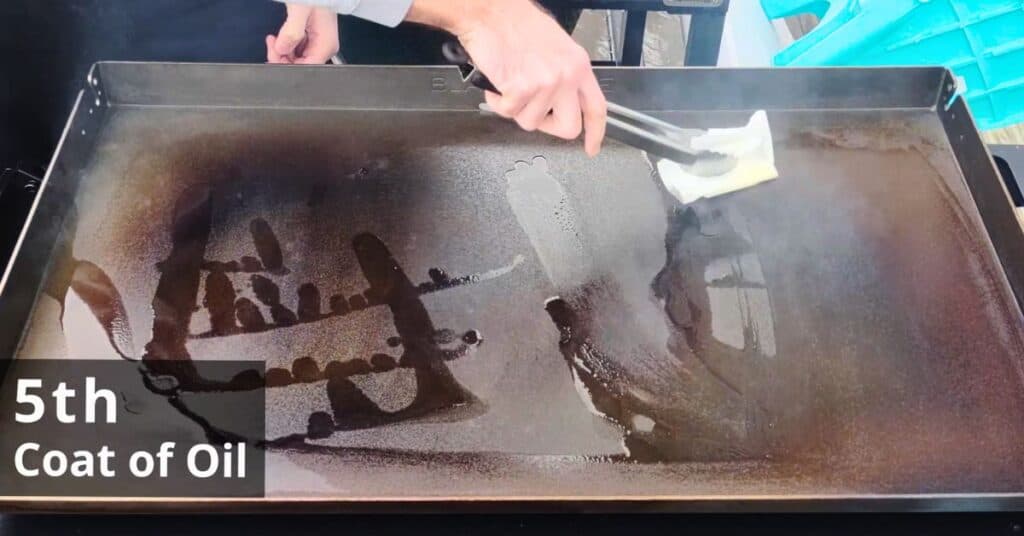
When seasoning a griddle, you want a thin layer of oil that polymerizes into a protective coating. I’ve used:
Can you season with bacon fat? No, because it will chip and flake off over time. The only exception for seasoning with bacon fat is if you use it daily. It's ok to season with bacon fat if you are cooking on it everyday, if you are not then it will definetly chip. Season first with oil, then cook with all the bacon grease you want.
Oils that I have used to season a griddle
- Avocado oil (my go-to)
- Blackstone Griddle Seasoning
- Canola oil
Blackstone recommends these for seasoning:
- Blackstone Griddle Seasoning & Cast Iron Conditioner
- Canola oil
- Flax oil
- Vegetable oil
- Shortening
- Olive oil
For more information check out my post How to Season a Blackstone Griddle.
What Oil to Cook on Your griddle With
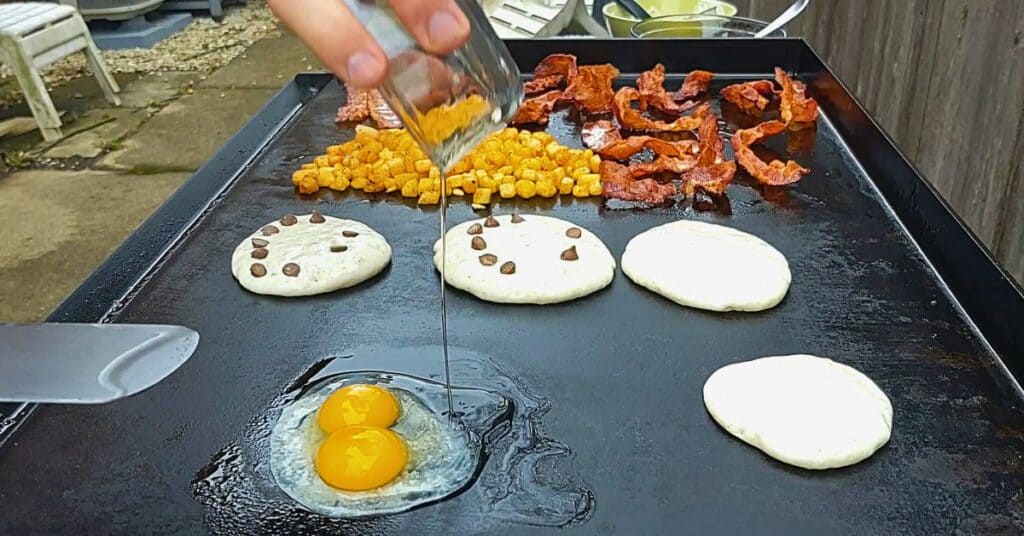
Oil Smoke Points
Before we get into specific oils, let’s talk about smoke point—the temperature at which oil starts to break down and burn. This gives food a rancid, burnt taste, and it’s why I recommend using high smoke point oils for griddle cooking.
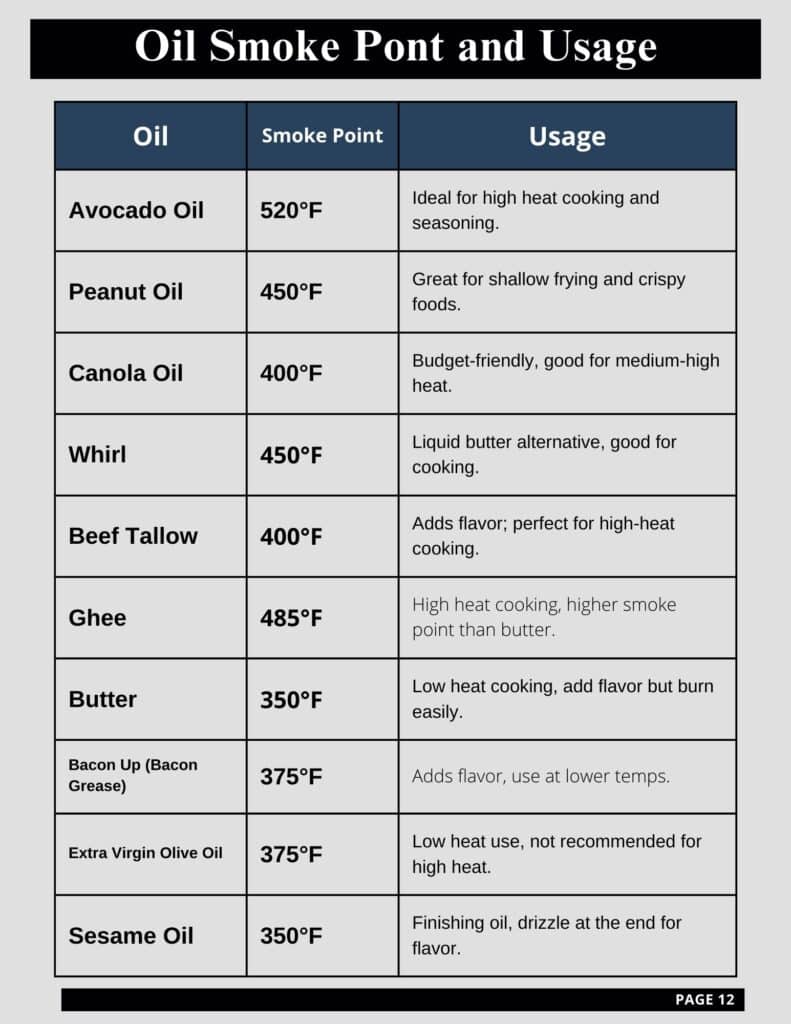
Most oil bottles list their smoke points, but here’s a general rule: Griddles get hot, so you want an oil that can handle high heat. Download the chart below here.
High Smoke Point Oils (Best for Griddle Cooking In My Opinion)
✅ Avocado Oil – My favorite because of its high smoke point (520°F) and neutral flavor. I use it 90% of the time.
✅ Peanut Oil – High smoke point (~450°F) and great for shallow frying. If I want crispy food, I use peanut oil.
✅ Ghee (Clarified Butter) – Butter with the milk solids removed, so it has a higher smoke point (~450°F) and is better for high-heat cooking.
✅ Canola Oil – Cheap and widely available. Smoke point around 400°F, so it works but isn’t my first choice.
✅ Whirl – A liquid butter alternative used in diners. Has a buttery flavor and works well for cooking. You can find it on Amazon or at food service stores. (~400-420°F)
✅ Beef Tallow – Some people swear by it for its flavor. I haven’t used it enough to say, but it’s worth looking into if you like extra beefy flavor and a natural animal fat. (~400-420°F)
Low Smoke Point Oils (Use With Caution)
- Butter – Delicious, but burns quickly. Use at lower temperatures or mix it with another oil. (~350°F)
- Bacon Up (Bacon Grease) – A tub of bacon grease. Adds great flavor, but has a lower smoke point, so use it at lower temps. (~375°F)
- Extra Virgin Olive Oil – Lower smoke point (~375°F). You can use it, but watch your heat.
- Cooking Sprays (Pam) – Blackstone recommends avoiding them because of potential chemicals affecting seasoning. If you want a spray option, buy a refillable oil spritzer and use your favorite oil.
- Sesame Oil – I use this as a finishing oil on dishes like fried rice. Just drizzle it on at the end for that hibachi-style flavor.
What Oil's Are Healthy For You
I don't know and neither do other random people screaming on the internet. Ask your doctor not a video from a stranger.
FAQ: Common Questions About Griddle Oils
I prefer high smoke point oils like avocado or peanut oil because the griddle gets hot fast. Canola works fine too. The key is using something that won’t burn easily.
Yes. Store your oils in a cool, dark place to prevent them from going bad. One guy told me his food tasted terrible, and it turned out he was leaving his oil bottles outside all summer. Don’t do that.
Apply as thin a layer as possible—about 2 tablespoons for a 4-burner griddle.
Same as seasoning: a thin layer (about 2 tablespoons) to protect the surface.
No, because it will chip and flake off. Season first with oil, then cook with bacon grease all you want.
Yes, just keep your heat lower. Butter has a lower smoke point and can burn quickly if the griddle is too hot.
I usually add a light layer before cooking. It helps prevent sticking and keeps the surface protected.
Less than you think. A thin, even layer is usually enough. You can always add more once the food is down.
Your griddle is probably too hot for that oil. Either turn the heat down or switch to a higher smoke point oil.
Final Thoughts
Choosing the right oil for your griddle is simple:
- Use high smoke point oils for cooking.
- Season with avocado, Blackstone seasoning, or another recommended oil.
- Cook with whatever you like, but keep smoke points in mind.
If you just got a Blackstone, check out my post Blackstone Griddle 101: The Complete Beginner’s Guide. It walks you through seasoning, cleaning, temperature control, cooking order and accessories.
If you want 101 griddle recipes with step-by-step videos, check out my $20 eBook!
Congrats to all the new griddle owners out there!

Comments
No Comments